Energy Label & Selling a Home in the Netherlands

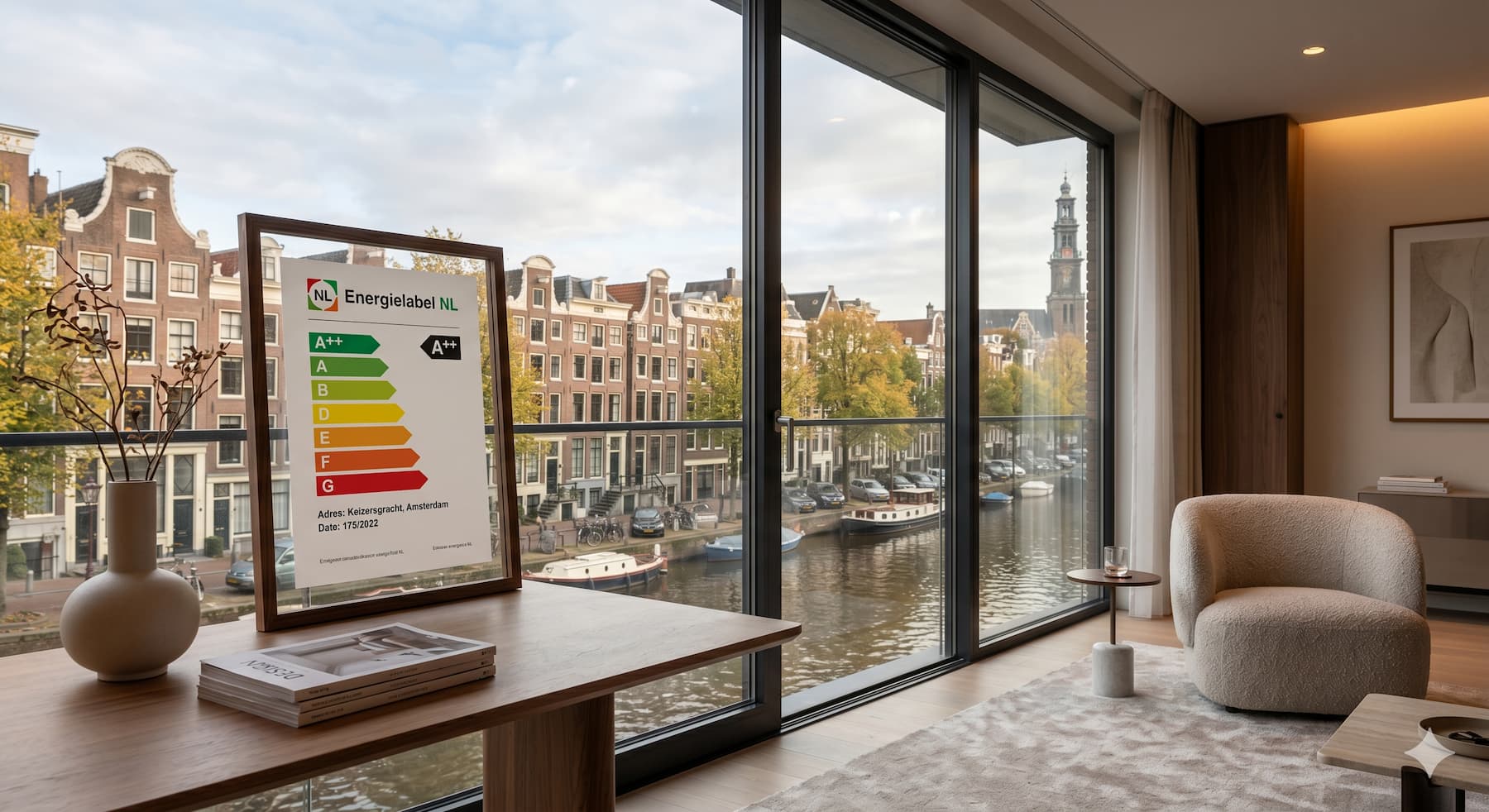
Selling your home in the Netherlands involves a lot of moving parts. Pricing, timing, finding the right agent. But there is one thing that has an impact on the amount of people interested in your property as well as their ability to purchase.
Your energy label.
Here is what it actually does to your sale.
It is a legal requirement first
Before anything else: if you are selling, you are legally required to provide a valid Energy Performance Certificate (EPC) to the buyer. Sellers who do not have one face a fine. This is not optional and it is not something to sort the week you decide to list.
If your current label has expired or was never formally registered, arranging a new one takes time. Worth checking early.
It affects how much buyers can borrow
This is the part that surprises most sellers. Since 2024, mortgage lenders in the Netherlands adjust how much a buyer can borrow based on the energy label of the property they are purchasing.
A buyer looking at a home with a D, E, F or G label may be approved for meaningfully less than the same buyer looking at an identical home with an A, B or C label. The gap can reach tens of thousands of euros in borrowing capacity.
What this means in practice: you are not just competing on price. You are competing on who can financially qualify to buy your home at all. In cities like Amsterdam and Utrecht, where buyers are already stretching their budgets, this effect is particularly pronounced.
It affects your final sale price
The data backs this up. Sellers who improve their label from D to B see average value increases of 1.5 to 2.5% per label improvement step. Homes that reach an A or A+ label outperform comparable properties by up to 10% on final sale price.
On a home worth 450,000 euros, that is a potential difference of up to 45,000 euros.
The inverse is also true. Properties with poor energy labels are sitting on the market longer and selling below asking price, not because buyers do not want them, but because their financing options are restricted.
Do you need to renovate before selling?
Not necessarily. The decision depends on your current label, the gap to the next level, and whether the cost of improvement is outweighed by the gain in sale price. Government subsidies are available for certain improvements such as insulation and heat pump installations, which can reduce the upfront cost significantly.
It is worth having this conversation before you list rather than after.
One more thing: solar panels
If your home has solar panels, be aware that the rules around feeding energy back to the grid are changing from 2027. Buyers are starting to factor this into their thinking. Solar panels are not a liability, but the value argument is more nuanced than it was a couple of years ago. Worth knowing before it comes up in negotiation.
Where to start
Check whether your current energy label is valid via energielabelvoorwoningen.nl. If it has expired or you are unsure whether improvements would be worth making before you sell, a short conversation with us can help you figure out what makes sense for your specific property.
Book a free call with our selling specialist.